Heart rate graph — what can I learn?
Written By KULG App
Last updated About 1 month ago
Runner (incl free), Coach (incl free) - data limited to 8 weeks
Runner (subscriber), Coach (subscriber) - unlimited history
KULG Heart rate graph shows the average heart rate compared to the maximum heart rate on your runs.
Additionally, the graph is not limited to running. You can select any other sport and view your heart rate for that sport, giving you a comprehensive overview of all your sports activities.
Heart rate (HR) is an important metric that provides a better understanding of your cardiovascular fitness and training intensity. Maximum heart rate helps to determine your heart rate zones.
What is heart rate? ❤️
Heart rate is the number of times your heart beats per minute. Your maximum heart rate is the highest rate your heart can achieve during physical exercise, while your resting heart rate is the number of beats per minute at rest. Tracking these can help you measure how well you're adapting to your training and how you are recovering. Keep in mind that heart rate data is highly individual and often cannot be compared to other people. Heart rate can also be impacted by caffeine, emotional state (stress, race anxiety, etc) and conditions (e.g. hot, humid, very cold climate), so you should also consider the context when drawing conclusions.
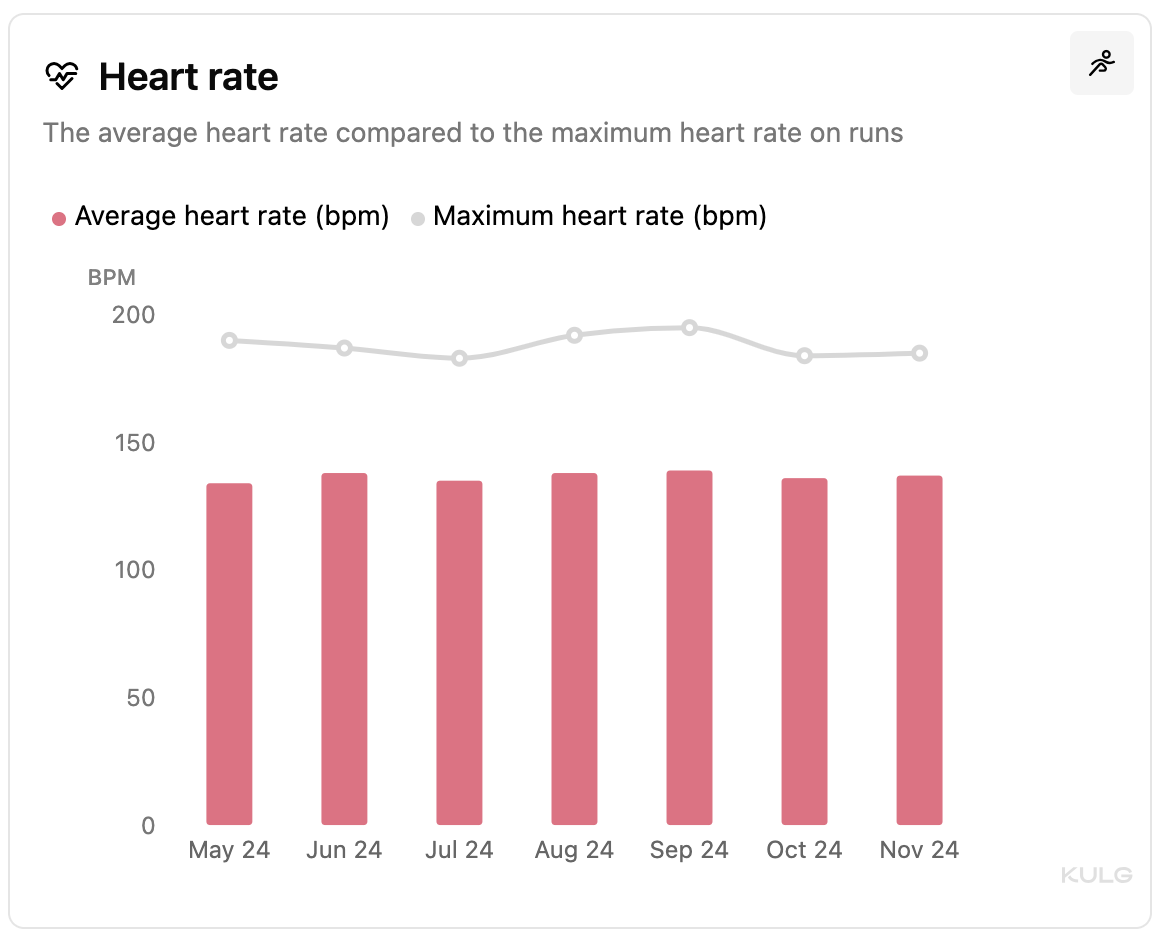
NB! Daily option is available if the selected time frame is within 6 months and weekly if it’s within 1 year.
Tips to understand progress 💡
→ Check your average heart rate trends in comparison to your average pace, perceived effort (RPE) and high intensity km in the same time frame.
→ If your average heart rate is decreasing or stable while your RPE rating goes down or pace is decreasing, then running at the same heart rate feels easier, which is a good sign.
→ Dig deeper into your average and maximum heart rate trends when filtering out easy runs or races.
→ Check how you’ve been able to reach your maximum heart rate over time and whether it has been going down. If it has clearly gone down you may need to update your HR zones.
Data accuracy ⌚️
Wrist heart rate is not an accurate measure of heart rate in the context of running. It measures blood flow changes in the wrist to estimate heart rate. Intense activity and factors like skin tone, sensor positioning, ambient light, and temperature can affect the readings, making wrist-based measurements prone to errors. Unfortunately, it is not even possible to conclude trustworthy trends based on wrist heart rate. To train smart, we highly recommend to get a chest- or arm-strap heart rate monitor.